
World-Building: Using the real world!

Updated: Apr 10
If you search this site (Fantasy-Faction), you'll find a treasure trove of articles that inspire you to think about how to construct your story's fantasy world. You can explore topics like culture, science, religion, races, beasts, vegetation, and, yes, landscapes.
Understanding Your Fantasy World
How do these elements fit together? How did your world come to be? And how do you make it feel ‘realistic’? I’ve put those quotes around “realistic” because we’re diving into fantasy worlds, where sometimes realism isn’t necessary. This isn’t a complete guide, just a basic look at the physical world.

1. Planet Size
Let’s start with planet size. Your planet will likely be about the same size as Earth. It’s a simple idea but crucial. Why? Because mass creates gravity, and gravity shapes physiology. Most fantasy novels feature humans, and many include dwarves and elves. If we take humans as the ‘average,’ their skeletons and muscles have evolved for a gravity of 1g (like ours).
Dwarves might be shorter because it’s an advantage in tunnels—they don’t bang their heads as often. Elves, with their longer limbs, could be better suited for climbing trees, where many authors place their homes. The size of your fantasy planet influences the size and shape of its inhabitants.
This also gives you measurements and distances to work with. I’m not saying you should go out and map every detail of your world right now. But keep in mind the basic size and arrangement of your world. This leads us to…
2. Plate Tectonics

Look at a world map, and you’ll quickly notice that great landmasses are divided by oceans and mountains. This isn’t by accident. The Earth's surface is thin compared to the whole planet—like an eggshell that cracks easily. Heat from the Earth’s core causes molten rock to rise and fall in convection currents.
These currents create friction on the bottom of the plates (the separate pieces of crust, or landmasses) as they float and move. It’s a slow process, and we should be grateful for that. If the plates moved quickly, we’d face earthquakes and tsunamis. Where the plates split apart, you get vast oceans (like the Atlantic), and where they collide, you find…
3. Mountains

Plate tectonics build mountains. The tallest mountains on Earth are the youngest, like the Himalayas. If you climbed to the top, you’d find seashells in the rocks. They didn’t swim up there; those mountains were once the ocean floor. As the plates crashed into each other—slowly—the sea floor buckled and rose into mountains.
If the plate margin is still active, you might find volcanoes among those mountains. Japan and New Zealand are prime examples. When you look at an atlas, you’ll see that mountains like the Himalayas, Rockies, and Alps form chains and ranges, not isolated peaks.
As altitude increases, temperature drops. Cooler air can’t hold as much moisture, leading to increased rainfall and snowfall—up to the point where it’s too cold to form any moisture at all. When snow melts or rainwater flows downhill, you get…
4. Rivers
Water always flows downhill, striving to reach sea level. Keep this in mind, and understanding how rivers change from their source (where they start) to their mouths (where they flow into the sea) becomes easier.

Rivers begin small and grow as tributaries join in, adding volume and increasing discharge. They follow the lowest points on the terrain. As they seek sea level, they erode downwards, often creating the lowest points. Near the source, you’ll find waterfalls and cascades. In the lower course, rivers slow down and deepen. This is where major towns and cities often develop.
Think about London on the River Thames, which is still tidal. Or Bristol on the River Avon, and New Orleans on the Mississippi Delta. New York is on the Hudson.
When you combine the factors above with the climate, you get…
5. Biomes
Biomes are areas with similar climates and vegetation. The map shows the major biomes on Earth, and like much of geography, there are patterns. Imagine the equator running through Brazil, below the Sahara in Africa, and just below the horn of India. This divides the world into North and South.
To the north, there’s more land; to the south, more ocean. This impacts weather patterns and ocean currents. As biomes progress north and south in parallel bands—from tropical to tundra—changes in weather and oceans create variations in that smooth pattern.
Average temperatures drop with distance from the equator, altering the climate and vegetation. If your heroes (or villains) are embarking on a journey, consider these factors before they set off.

Build Your Own World
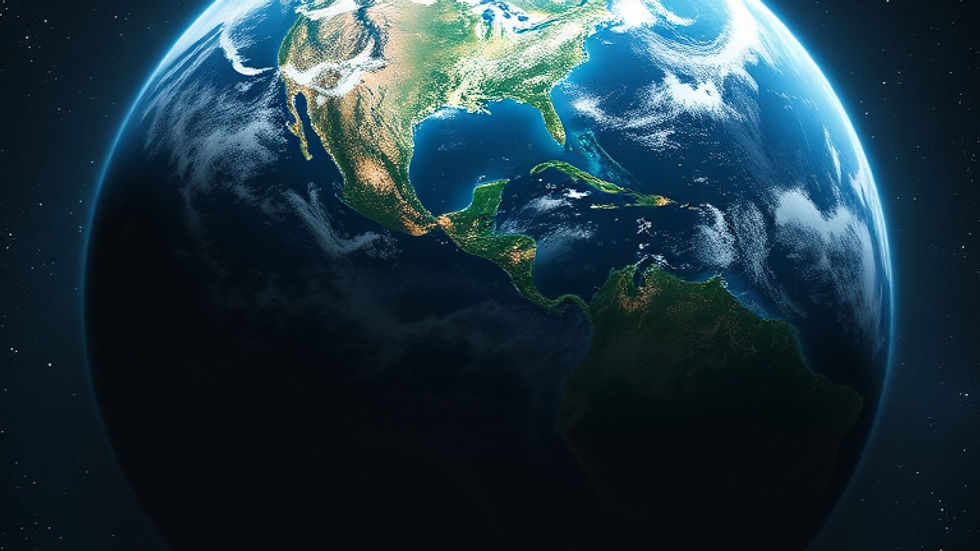
Grab an atlas, explore Google Earth, and investigate maps. You’ll notice the patterns I’ve mentioned in their basic forms. If you want to create a realistic world or location, it’s easier to borrow from our world. Change the coastline a bit, adjust the borders slightly, and rename places. Use old maps as a starting point.
This post originally appeared on Fantasy-Faction back in 2014 - https://fantasy-faction.com/2014/building-a-world-basic-concepts
So, what do you think? Are you ready to dive into world-building? Let your imagination run wild!

